/The Challenge
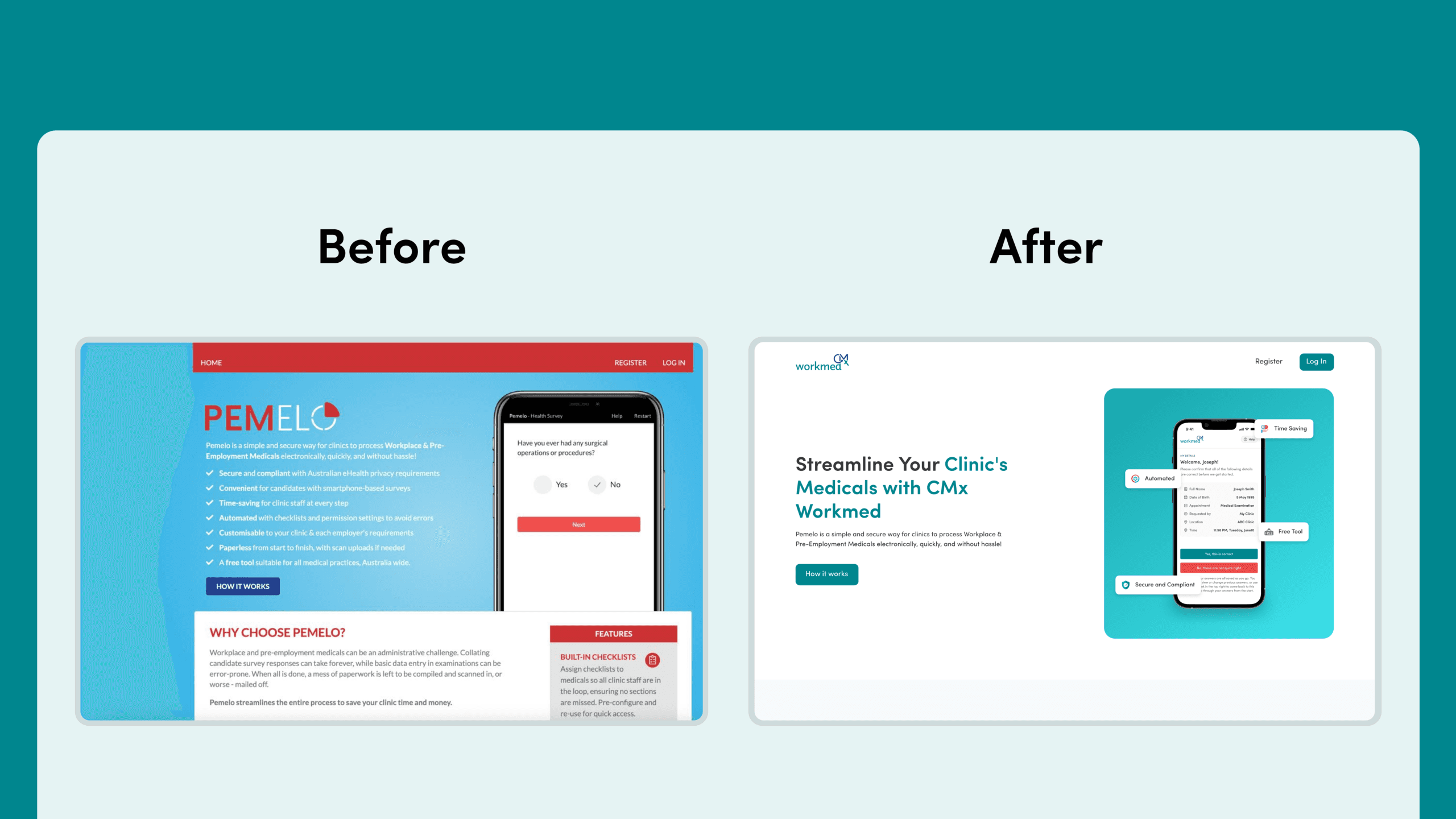
Before the transformation began, clinics were operating on a legacy platform that had slowly fallen out of step with the pace and complexity of modern clinical workflows. On the surface, it still functioned. Appointments could be created, medical forms could be completed, and reports could be sent. But underneath, the cracks were widening.
For clinic staff, the system felt more like an obstacle than a tool.
Daily routines were interrupted by long loading times, screens that didn’t scale properly across devices, and navigation paths that left users guessing what to do next. Doctors moving between rooms couldn’t reliably access the system on tablets. Front-desk staff often spent extra time helping candidates who were confused by the interface. Even the simplest flow like logging in, felt unnecessarily slow.
The impact went beyond inconvenience.
When a booking flow takes too long or information is hard to find, it affects the clinic’s ability to turn around assessments on time. When the system isn’t intuitive, staff rely more on manual workarounds. When pages load slowly, clinics fall behind during peak periods. When accessibility is weak, some users are unintentionally left behind.
Internally, the legacy system carried its own weight. Years of incremental changes, technical debt that made updates risky, and a codebase that wasn’t built for modern scalability. Small fixes could cause unexpected breaks. Adding new features was difficult. Support tickets grew as users struggled with layouts that weren’t designed for today’s demands.
All of this created a widening gap between what clinics needed and what the platform could deliver. The challenge wasn’t simply to “refresh the interface,” but to rethink the system, to rebuild core workflows, address deep-rooted usability problems, modernise the architecture, and deliver a platform that not only solved current issues but was ready for the next chapter of CMX WorkMed’s growth.